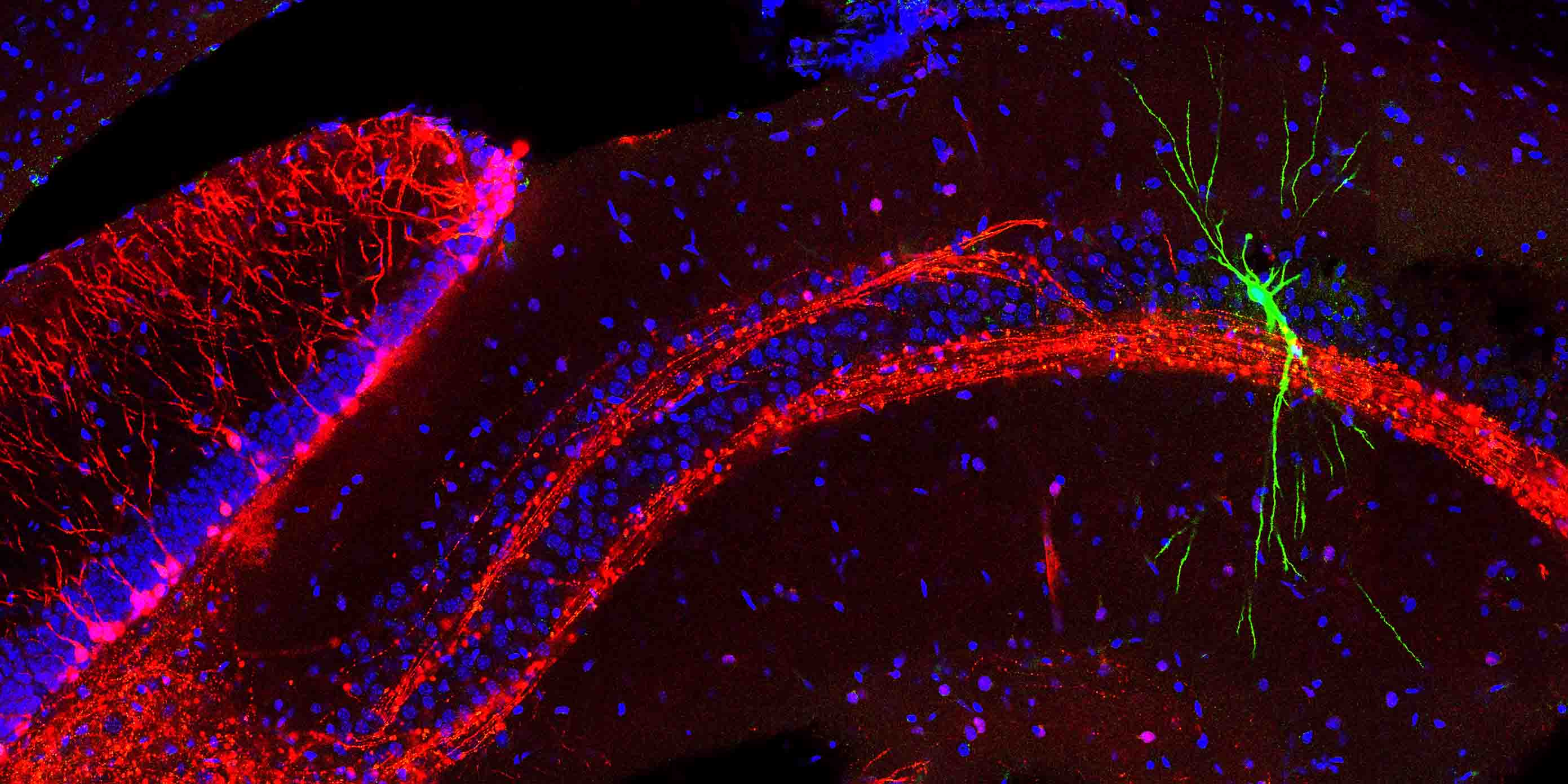
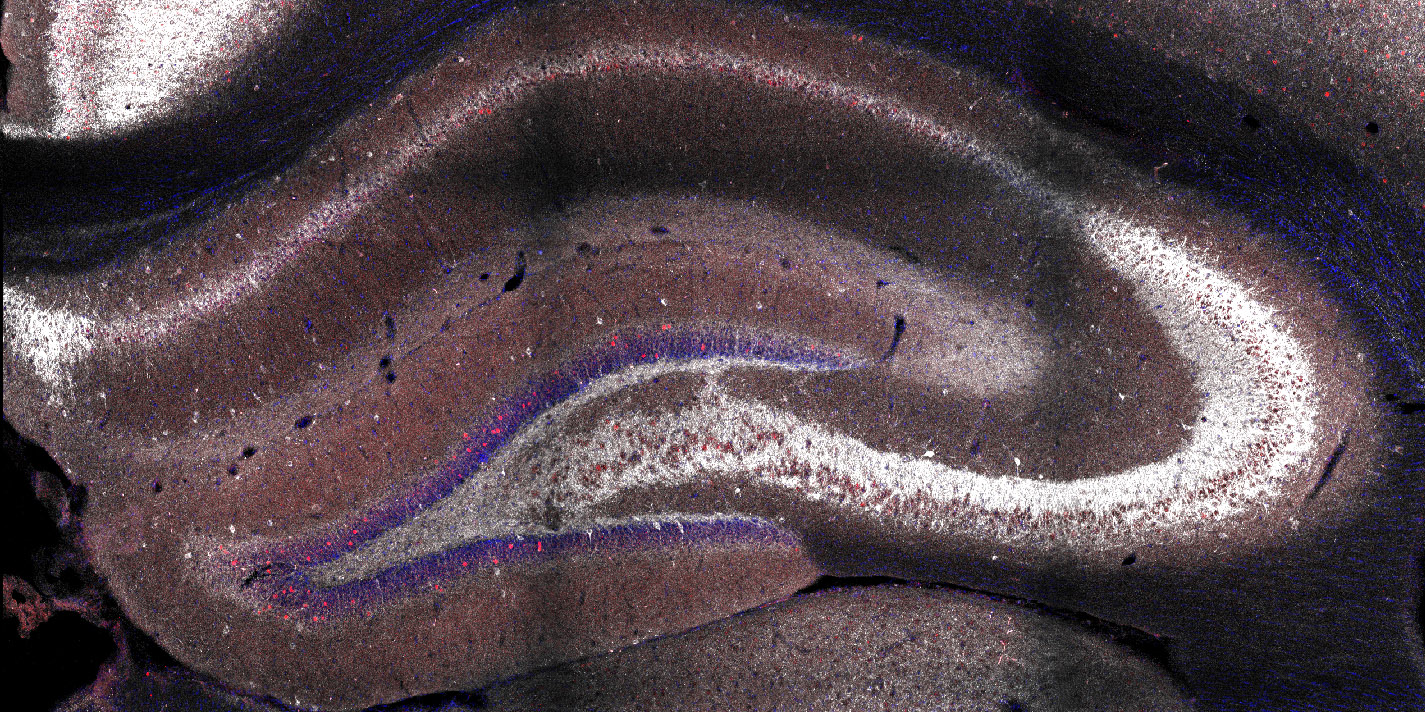
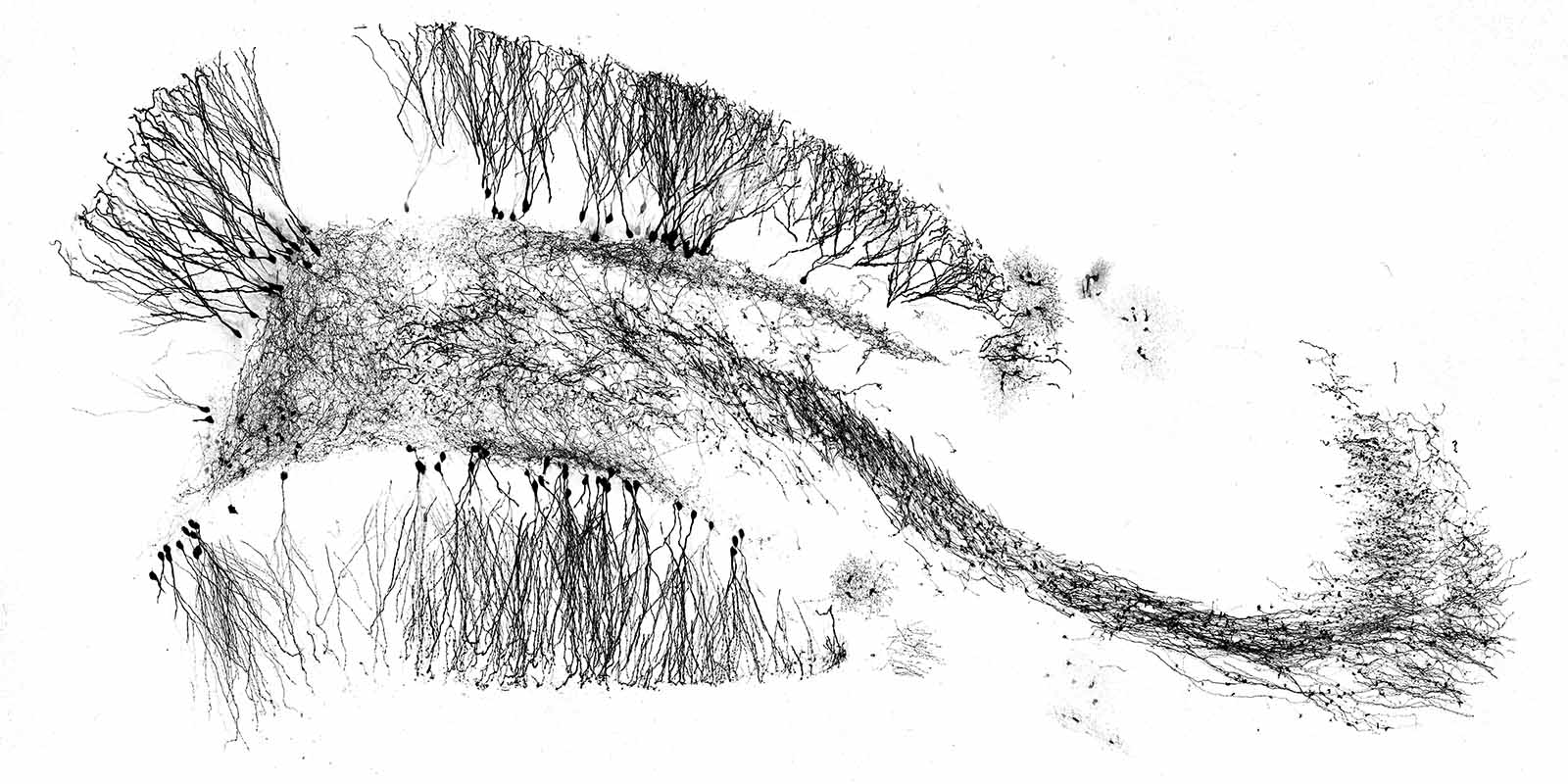
We demo’d an Olympus FV1200 confocal microscope, which I used to acquire these images of a couple interneurons, labelled with GFP. The video was made with Imaris, which offers some cool moviemaking features that you won’t find in your standard confocal software. BEST VIEWED IN HD!!!
Lab notebooks, lab websites, the future.
About a year ago I went through a phase of rabid excitement regarding my lab’s website. Then I had to do some experiments, write grants, move across the country. And then today I became rabidly excited again. Things in the Snyder lab are at a critical moment. My first 2…
RSS is (not) dead (to me)
I’ve thought of writing about RSS feeds for scientists for a couple of years now so it’s kind of funny that I’ve only gotten around to it 3 days before Google shuts down Reader. And it must be important to me because this is my first post in 6 months…
New neurons mature slower in the temporal/ventral dentate gyrus
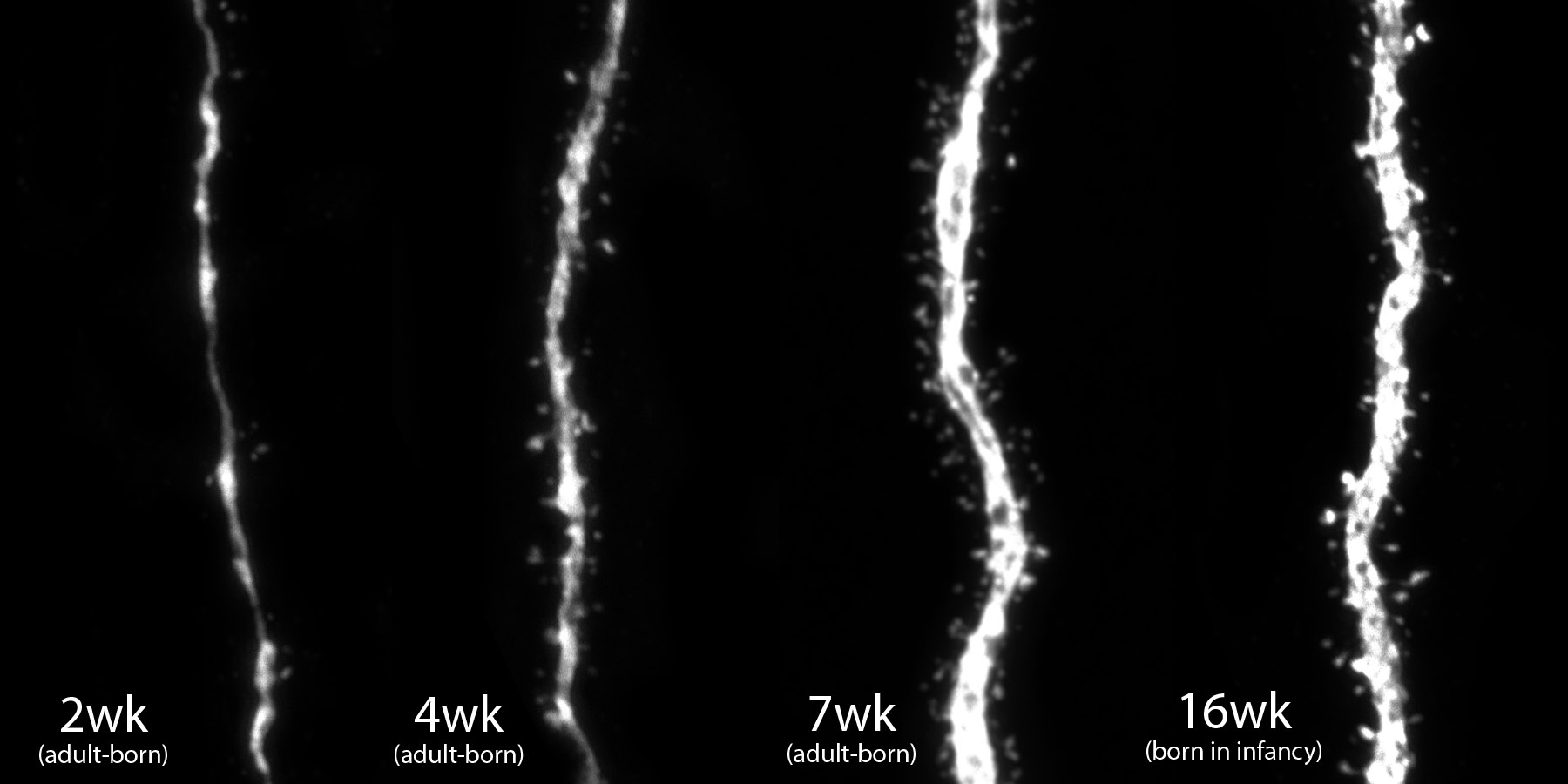
I’ve previously written about the functional differences between the septal (aka dorsal aka rostral¹ aka posterior²) and temporal (ventral/caudal/anterior) hippocampus and how studies are increasingly not treating the hippocampus as a single homogeneous structure. Myself and others have extended this perspective to studies of adult neurogenesis and now I’m happy…
Crosspost: Saving & sharing presentation lists on the new and improved Hubbian
Originally posted at Hubbian There’s one week remaining before the Society for Neuroscience annual meeting begins. That means you have about 6 days before you really really have to start tallying a list of presentations. Of course, WITH HUBBIAN*, you actually could put it off that long and still gather a…
A formal invitation to join the Snyder lab
My UBC Psychology page and Neuroscience links are up. Grad school application deadlines are approaching. I think it’s time to formally advertise that… I WANT YOU IN MY LAB! The lab’s goal is to identify the role of adult neurogenesis in memory and stress-related behaviours. We inhibit neurogenesis with transgenic…
#Hubbian: the toy that makes navigating 20,000 abstracts fun.
THIS IS EXCITING. READERS THAT ARE PREGNANT / HAVE HEART PROBLEMS STOP NOW CLICK HERE. Over 30,000 people attend the annual Society for Neuroscience meeting and for this reason alone people either love it or hate it. On one hand, you can learn about any type of neuroscience research imaginable.…
Impaired adult neurogenesis leads to depression – is it realistic?
About a year ago we published a paper linking adult neurogenesis to depression. A causal sort of ‘linking’, right? I mean, we found that, when adult neurogenesis was eliminated, mice had elevated glucocorticoids in response to stress and showed depressive-like behaviours1. So doesn’t this mean that impaired adult neurogenesis could…
Virus: a new tool for generating pretty pictures
Now that I have something to show for it, let this be a formal announcement that I’ve returned to Toronto to join Paul Frankland’s lab (and therefore the larger Josselyn-Frankland group). I’ve always liked their work and one of the techniques I’m excited to learn is the use of viruses to…
Forming and recalling memories. Artificially.
Memory manipulation has become one of the most hotly pursued topics in neuroscience. After all, much or of who are is based on what we’ve learned, including memories that we can consciously recall as well as acquired desires and habits that can lead to problems like addiction. In rodents, we’ve known…
Google Scholar vs. Scopus & Web of Science
A couple of interesting correspondences (here and here) just appeared in Nature on the legitimacy of Google Scholar for tracking citations. Interesting because I’ve recently been pondering the same issue but came up with the opposite conclusion, namely that Google Scholar is actually a better tool for tracking citations than…
The White House wants your thoughts on open access to scientific publications! Deadline January 12!
Do you live on planet earth? Then you probably pay taxes. And if you pay taxes then you’re supporting scientific research. Thanks a lot – that’s really great. Thanks to you scientists can make discoveries that lead to cures for diseases. And we’d really love to share these discoveries with…
Astrocytes: a story in pictures. Ok, just a bunch of pictures.
One trick on the confocal microscope is to use a larger pinhole so that a greater thickness of the section is captured in the image. Images acquired this way are comparable to a bunch of thin sections that are then merged into a “z-stack” except that some of the tissue…
Can you enjoy a good cup of coffee in the thick of experimenting?
More specifically, Can you enjoy a good cup of coffee when you have 8 straight hours of experimenting with maximum 10 minute breaks here and there but it takes you 5 minutes just to get to the lab kitchen from the behavior space let alone make a coffee and get back in…
Saving the best for last: neurogenesis, plasticity and memory. #SFN11
Previously, I wrote about new SFN data on the role for newborn neurons in regulating emotion. The second half of the SFN meeting rounded out the story because the bulk of the functional presentations focussed on the role of new neurons in that other, classic function of the hippocampus: memory.…
Enhanced integrative properties of immature neurons #sfn11
How do the physiological properties of new neurons translate to a behavioral role? Are they just like mature neurons or are they unique? One idea that’s been thrown around is that their plastic period, their critical period, might endow them with an enhanced ability to associate information and contribute to…
Neurogenesis and the septotemporal axis at #SFN11
As I’ve alluded, science, and therefore the SFN meeting where much science is unveiled, is a cycle of confusion and clarification. Currently, confusion may be prevailing in the adult hippocampal neurogenesis field since new neurons have been implicated in everything mammals do – spatial and nonspatial memory, anxiety, depression, addiction,…
What I learned while presenting at #SFN11
It’s hard to explore SFN when you’ve got your own poster to tend to. I thought I could hop around the development section before things got busy but there was no “before things got busy.” The design of the conference also can work against presenters because the presentations you’d like…
Saturday Nov 12, #SFN11, poster A27 = me
Update: The poster is now available at Nature Precedings. Still acquiring histological images for my SfN poster. My recurring problem is that I end up taking pictures of things because they’re pretty and not because they have anything to do with the task at hand. Today’s case in point: Well,…
SFN 2011 Neuroblogging
The annual most insanely huge neuroscience meeting is rapidly approaching and I am pleased to announce that I will be blogging about the meeting again this year, here at Functional Neurogenesis. The meeting will be held at the Washington DC convention center, located in “China” town, which is cool because in…